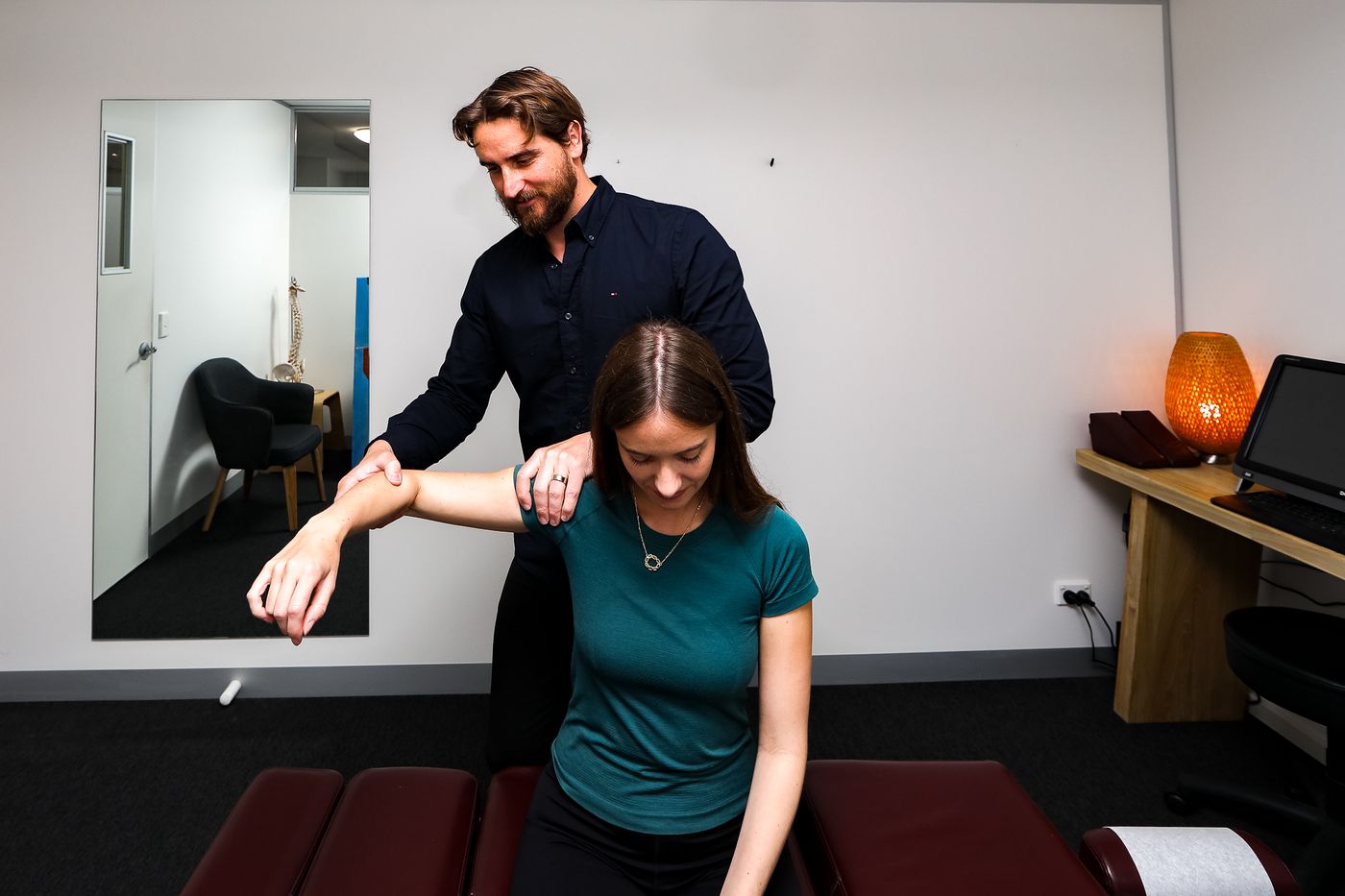
A golfer sits down on my table, points to the lower back and says, "It's my back that hurts." Then I check their hips, and in a lot of cases that is where the story really starts.
I see this often with players from Rosebud Country Club and the other courses down the peninsula. The back is where the pain shows up. The stiff hip is often the reason the back is working harder than it should.
What your hips are meant to do in the swing
The golf swing is a rotation. Your trail hip turns back on the backswing, then your lead hip has to turn and clear out of the way on the downswing so the arms and club can come through. Your lower back is built mainly for stability, not for big turning movements. The hips and the upper back are the parts designed to rotate.
When a hip can't turn as far as the swing asks, the movement has to come from somewhere. The body is clever, and it finds it. Very often it borrows that turn from the lower back. One swing does no harm. But a few hundred range balls, a round on Saturday and a round on Wednesday add up, and the lower back takes the load each time.
Signs your hips might be part of the problem
- Your lower back feels tight or sore after a round, but not so much when you are just walking around.
- You feel a pinch or ache at the front or side of the hip when you turn through the shot.
- Your lead foot spins out or you stand up through impact to get around.
- Getting in and out of the car, or putting on socks and shoes, feels stiffer than it used to.
- One side of your back always aches first, usually the lead side.
None of these prove the hip is the cause. They are the reasons I always look at hip movement when a golfer comes in with back pain, rather than only looking at the back.
Why hips get stiff
It is rarely one thing. In my experience on the Mornington Peninsula, these are the common ones:
- Sitting. Long drives, office work and the couch all keep the hips bent for hours. Over time the muscles at the front of the hip shorten and the joint gets used to a smaller range.
- Age. Many of my older patients, including golfers who live around Capel Sound and The Village Glen, have hips that have lost some range over the years. That is normal, and it often still responds well to care.
- Old injuries. A past fall, a sore knee or a previous back problem can change how you move, and the hip often ends up stiff as a result.
- Joint wear. Some hips are simply a bit arthritic. That can limit the turn even when the muscles are fine.
- Repetition. Playing a lot of golf on one side of the body builds up tightness in the same places.
How I check it
When a golfer comes in, I watch how they move before I touch anything. I check how far each hip turns, both inward and outward, and compare the left with the right. I look at how the pelvis and lower back move when the hip runs out of range. I also look at the upper back, because a stiff upper back and a stiff hip together leave the lower back with nearly all the work.
This is part of the TPI screen, which I use as a TPI Level 1 certified practitioner. If you want to know more about the tests, I have written about them in The TPI screen: the simple movement tests that show why your swing hurts your back.
How chiropractic care can help
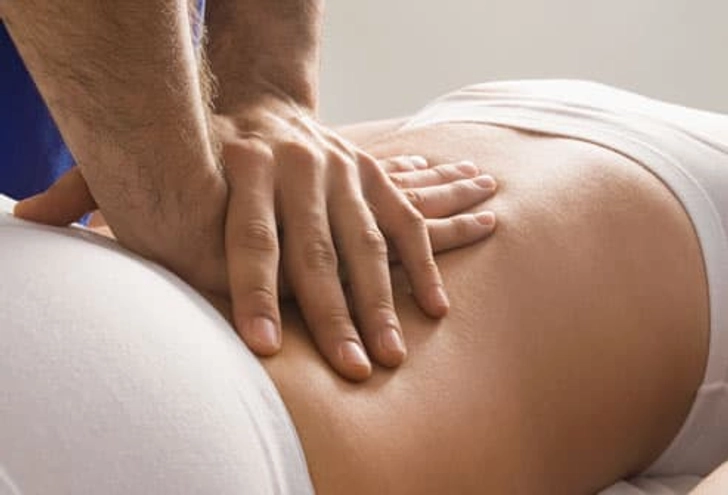
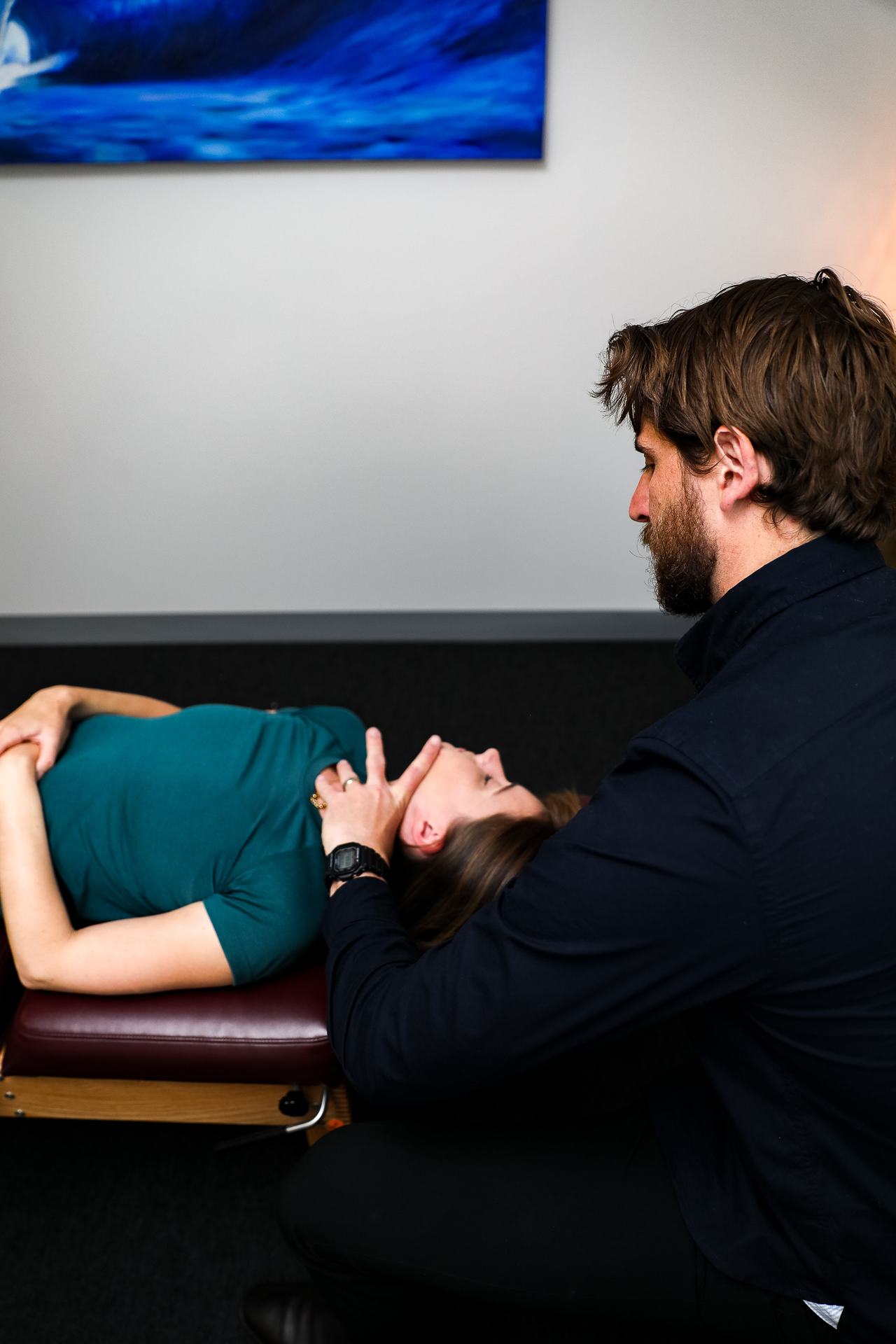
My starting point is chiropractic adjustments. Adjustments to the lower back and pelvis can ease the stiff, irritated joints that have been taking the strain, and adjustments to the hip and the upper back can help those areas move more freely. I use the Activator instrument for patients who prefer a gentler approach, and the drop-piece table for others. Both are suited to golfers, and I choose based on what your body is telling me on the day.
Soft tissue work follows. Tight hip flexors, glutes and the muscles around the lower back are often sore from doing extra work, and releasing them helps the joints move better after an adjustment.
Then comes the part that makes the difference over time: simple exercises you can do at home. I keep these short and specific to what I found when I tested you. They might include:
- Hip rotation drills on the floor or in a chair to help each hip turn further.
- Hip flexor stretches after a long day of sitting or driving.
- Glute strengthening so the hips can control the turn instead of leaving it to the back.
- Upper back rotation so the turn is shared between the hips and the upper back, not dumped on the lumbar spine.
I would rather give you two or three exercises you will actually do than a long sheet you will leave in the glovebox. The aim is to help your hips share the work, so your lower back can stop doing a job it was never built for.
What you can do before your next round
A few simple habits can help while you are waiting to be seen:
- Stand up often. If you sit for long stretches, get up and walk around regularly so your hips don't stiffen.
- Warm up your hips. Before you hit a ball, do some gentle leg swings and rotations. Don't walk straight from the car to the first tee.
- Turn, don't twist. If your hip feels stuck, notice whether you are turning from the hip or twisting from the back. Slow practice swings can help you feel the difference.
Back pain that keeps coming back
Many golfers tell me their back pain comes and goes. It settles for a while, then flares up again after a big weekend. When that happens, treating only the sore spot can leave the cause in place. Looking at the hips as well gives us a better chance of working out why it keeps returning, and of helping you stay on the course.
If the pain is not only in your back but also in the hip or knee, our page on hip and knee pain explains how we approach it. For back pain on its own, see low back pain. And if golf is the main reason you are reading this, our golf chiropractor page covers how we help players of all levels.
Book in with Dr Nick
If your back hurts when you play and your hips feel stiff, it is worth having both checked together. You can book online, call the clinic on the number at the top of the page, or ask for a free phone consultation with Dr Nick to talk through what is going on before you come in. We are at 1639 Point Nepean Road, Capel Sound, between the Capel Sound Newsagency and Sound Bar, with plenty of free street parking.