
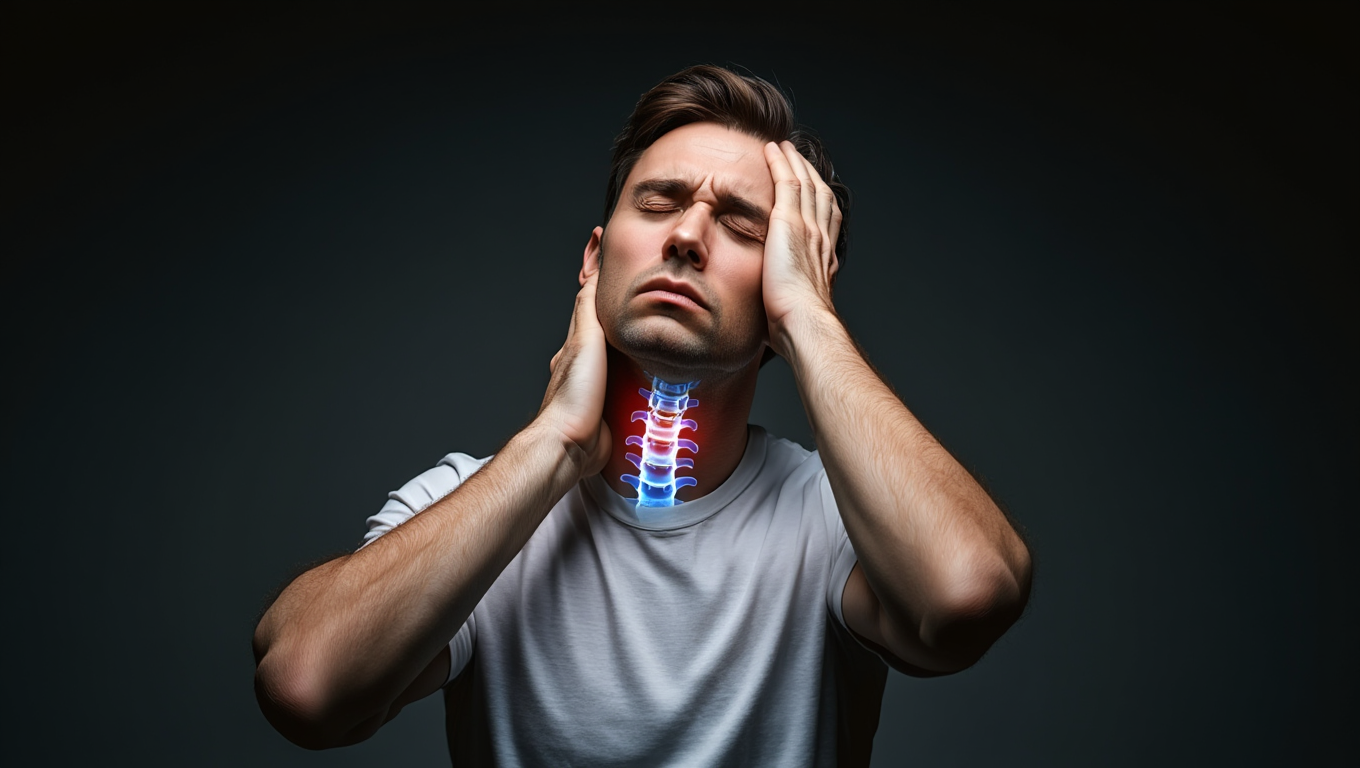
If you get headaches regularly, you’ve probably tried the usual stuff. More water. Less coffee. Better sleep. New pillow. Different screens. Sometimes it helps, sometimes it does nothing.
What many people do not realise is that for a big portion of headache sufferers, the neck plays a role. Not in a vague “posture” way, but in a real, anatomical way. That is why people often notice headaches after long desk days, stressful weeks, poor sleep positions, or even after holding their phone between their ear and shoulder.
This is what people mean when they talk about the migraine neck connection.
To be clear, not every migraine starts in the neck. Migraines can be influenced by hormones, stress, diet, sleep, hydration, and nervous system sensitivity. But the neck can be a major trigger or amplifier for some people, especially when the headache pattern is linked with posture, movement, or muscle tension.
This article will explain the neck–headache link in plain language, what a cervicogenic headache looks like, and when it might make sense to speak with a clinician, including a headache chiropractor, to explore treatment options.
Safety note: seek urgent medical attention for a sudden “worst headache of your life,” headache with fever and stiff neck, new neurological symptoms (confusion, fainting, weakness, speech changes, vision loss), headache after head trauma, or a new headache pattern that is rapidly worsening.
Why the neck can trigger headaches
Your neck is packed with joints, muscles, and nerves. The upper part of the neck, especially, has close connections with the nervous system pathways that process head pain.
When the joints or muscles around the upper cervical spine become irritated or overloaded, they can refer pain into the head. That referred pain can feel like a headache that starts at the base of the skull, spreads behind the eye, or wraps around the head like a tight band.
This is not about “bones being out.” It is about irritated structures and a sensitised system. Over time, if those structures stay irritated, headaches can become more frequent or easier to trigger.
Migraine, tension headache, and cervicogenic headache: what is the difference?
Headache labels can get confusing because symptoms overlap. Still, there are patterns that help.
Tension-type headaches
These often feel like pressure or tightness around the forehead or head, sometimes like a band. They are commonly linked with stress and muscle tension and may be milder than migraines, but they can still be draining.
Migraines
Migraines often have features like throbbing pain, nausea, light sensitivity, sound sensitivity, and sometimes aura. They can be triggered by many factors, including nervous system sensitivity.
Cervicogenic headache
A cervicogenic headache is a headache that is driven by the neck. It often feels one-sided, can start in the neck, and may be triggered or worsened by certain neck movements or sustained postures. People commonly describe it as pain that starts at the base of the skull and travels forward.
Cervicogenic headaches can coexist with migraines. In other words, the neck can be a trigger that sets off a migraine attack in someone who is prone to migraines. That is a big part of the migraine neck connection conversation.
Signs your headaches may be linked with your neck
Here are some clues that neck function could be part of the puzzle:
- Headaches that start after long periods of sitting, driving, or computer work
- Headaches that feel like they start at the base of the skull
- Neck stiffness or limited range of motion alongside headaches
- Headaches that worsen when you look down at a phone or laptop
- Tender spots in the upper neck or shoulders that reproduce head pain
- Headaches that improve with heat, movement, or a change in posture
- Headaches that are more frequent during stressful weeks, when you hold tension in the neck
If you relate to several of these, it is worth considering the neck as part of your plan rather than only chasing triggers like food or hydration.
The posture and load factor most people miss
Posture is not a moral issue. It is load.
You can sit with “perfect posture” and still get headaches if you sit for too long. The muscles that hold your head up fatigue, the upper neck joints take more strain, and the system gets cranky.
That is why people can feel fine in the morning and then get a headache by mid-afternoon. It is not always a sudden trigger. It is a slow build.
What helps is not forcing yourself into a rigid posture. What helps is changing positions often, taking micro-breaks, and making your workspace less demanding on the neck.
Simple daily habits that reduce neck-driven headaches
If your headaches have a neck component, small changes done consistently tend to help more than occasional big efforts.
1) Screen height and distance
If you are looking down at a laptop all day, your upper neck is under constant load. Raising the screen closer to eye level reduces that strain. Even a few books under the laptop can help.
2) Micro-breaks
Set a reminder every 30 to 45 minutes to stand up, roll the shoulders, and gently move the neck through a comfortable range. Two minutes is enough.
3) Gentle movement, not aggressive stretching
Aggressive neck stretching can make some people feel worse, especially if their system is already sensitive. Slow, controlled movement is often a better starting point.
4) Breathing and shoulder tension
People carry stress in their shoulders without realising. A few long exhales can reduce that constant “held” tension that feeds into headaches.
5) Sleep position support
If you wake up with a stiff neck, your pillow height might be off. Side sleepers often do well with a pillow that fills the gap between shoulder and neck. Back sleepers usually do better with a lower pillow that does not push the head forward.
These changes are simple, but they reduce load on the neck. Less load often means fewer triggers.
When a headache chiropractor may help
If your headaches keep returning, or you suspect your neck is part of the cause, it can help to get a proper assessment rather than guessing.
A headache chiropractor approach usually focuses on:
- Identifying restricted or overloaded segments in the neck and upper back
- Reducing tension and improving mobility
- Providing guidance on posture, workspace changes, and movement habits
- Supporting a plan that builds resilience through the neck and shoulder region
This is not about guaranteeing migraines disappear. It is about reducing one common driver and improving how the neck handles daily load.
If you want to see how we describe migraine and headache care, you can visit our Headaches and Migraines page.
Local context: Rosebud and the Mornington Peninsula
Headaches are one of those issues that make people quietly miserable. They might still go to work and push through, but their quality of life takes a hit. That is often when they search Chiropractor Near me because they want another angle, especially if medications are not the full answer.
If you are local and looking for a Chiropractor Rosebud option, our clinic in Capel Sound supports people across the Mornington Peninsula with neck-related headaches, migraines, posture strain, and upper back tension.
If you are new to care and want to know what happens in an appointment, our First Visit guide explains what to expect.
FAQs
Can the neck really cause migraines?
The neck does not cause migraines for everyone, but it can be a trigger or amplifier for some people. Restricted movement, sustained posture load, and upper neck irritation can contribute to headache patterns and sometimes set off migraine attacks in susceptible individuals.
What does a cervicogenic headache feel like?
A cervicogenic headache often starts in the neck and refers pain into the head, commonly one-sided. It may worsen with certain neck movements or prolonged postures and often comes with neck stiffness.
How do I know if my headache is serious?
Seek urgent medical care for a sudden severe headache, headache with fever and stiff neck, new neurological symptoms, vision changes, headache after trauma, or a new rapidly worsening pattern.
What can I do at home for neck-related headaches?
Raise your screen, take micro-breaks, reduce long slumped sitting, use gentle movement, support sleep posture, and manage shoulder tension with slow breathing.
When should I get my headaches assessed?
If headaches are frequent, changing, disrupting sleep or daily life, or linked with neck pain and stiffness, it is worth getting assessed so you have a clear plan.