
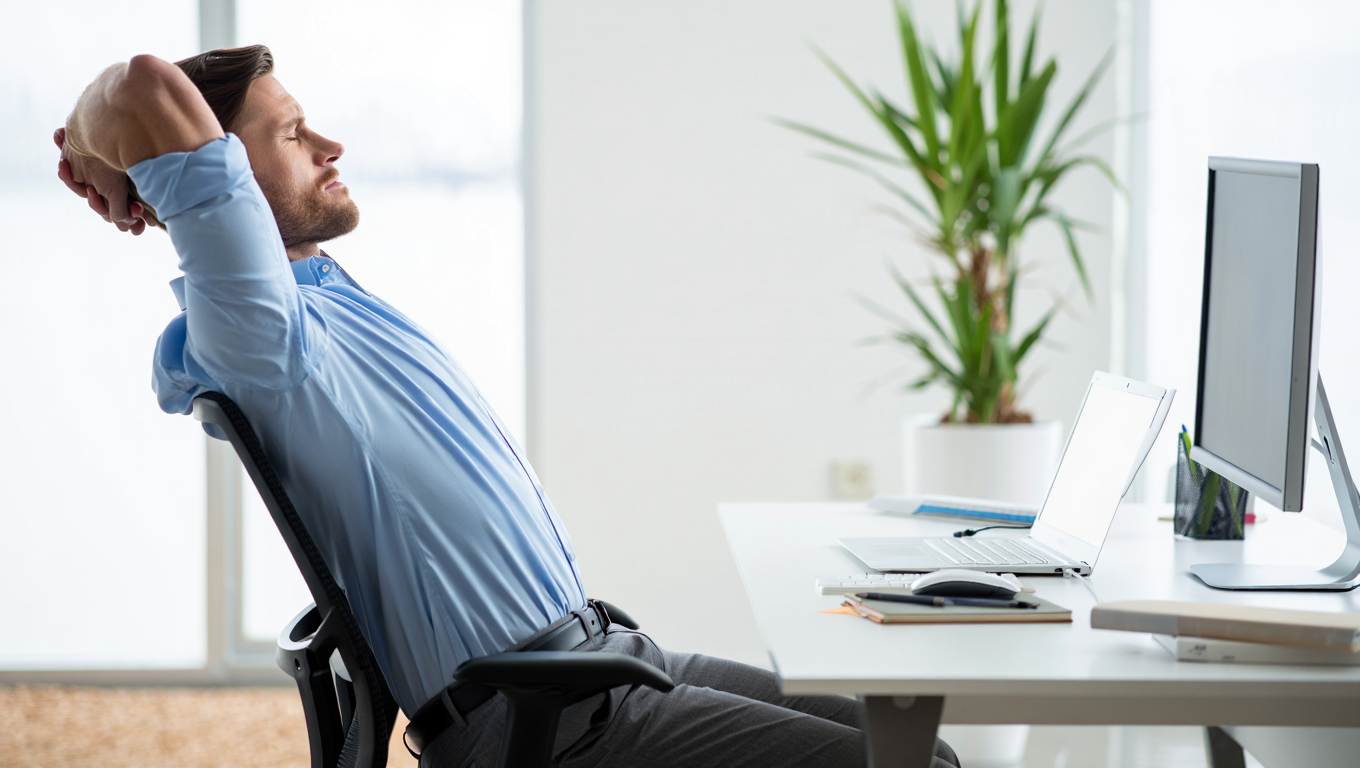
If you’ve got a desk job, there’s a decent chance you’ve asked yourself at some point, “Why is my back like this when I haven’t even done anything?” You sit for meetings, you sit to reply to emails, you sit in the car, then you sit again at night. And suddenly you’ve got that dull ache across the beltline, stiffness when you stand up, or a sharp pinch when you lean forward.
Lower back pain sitting all day is one of the most common patterns we see, and it affects office workers, students, tradies who drive long hours, and pretty much anyone who spends a lot of time in one position. The good news is that most cases respond really well to a few simple changes done consistently.
This article will walk you through what’s actually happening, how to fix your setup, and what to do day to day so your back stops feeling like it’s “getting older” faster than you are.
Why sitting all day can irritate the lower back
Your lower back isn’t designed to be locked into one posture for hours. Even if your posture looks “good,” staying still means the same tissues are taking the load again and again.
Here’s what tends to happen with long sitting:
Your hips stiffen in a flexed position.
When your hips stay bent, your hip flexors can tighten. When you stand up, those tight hip flexors can pull your pelvis forward, which may increase the arch in your lower back. That can feel like a pinch, tightness, or a deep ache.
Your glutes stop contributing as much.
Glutes are meant to help stabilise the pelvis when you stand, walk, lift, and climb stairs. When you sit for long periods, they basically go on standby. Then the lower back muscles can try to “do the job” and get cranky.
Discs and joints get compressed in the same direction.
A slumped position, even slightly, can increase pressure through certain spinal structures. If your back is already sensitive, that pressure can build over hours and show up later in the day or the next morning.
You lose variety.
The biggest issue with sitting is not sitting itself, it’s the lack of position changes. Your back loves variety. Your back hates being stuck.
How to tell if your pain is mainly sitting-related
Every case is different, but many people with office-style back pain notice patterns like:
- Pain that ramps up through the day, especially after long blocks at the desk
- Stiffness when you stand after sitting, then it eases after a few steps
- A “tight band” feeling across the lower back
- Discomfort that’s worse after driving
- Feeling better on weekends if you move more, then worse again on Monday
If you have pain that shoots down the leg, numbness, tingling, or weakness, that’s a different pattern and worth assessing sooner. You can also read about common sciatica signs on our Sciatica page.
The desk setup that helps most people fast
You do not need a perfect ergonomic chair to get improvement. You just need your setup to reduce strain and make movement easier.
1) Sit back, do not perch
Most people perch on the edge of the chair, which forces the lower back to hold you up. Scoot your hips back in the seat so the chair supports you.
2) Feet supported
If your feet are dangling or you’re tucking one foot under, your pelvis often rotates and your back compensates. Aim for feet flat. If the chair is high, use a small footrest or even a sturdy box.
3) Screen height matters more than you think
When the screen is too low, you drop your head and round your upper back. That posture often travels down to the lower back over time. Get the top third of your screen closer to eye level, especially if you’re on a laptop.
4) Add a small lumbar support
This is simple and underrated. A small rolled towel or lumbar cushion can help you stay in a more neutral position without effort. It should feel supportive, not like it’s forcing a big arch.
5) Make your “reach zone” smaller
If your mouse is far away or you’re constantly leaning forward to type, the back is repeatedly taking strain. Pull everything closer so your elbows can stay near your sides.
If you want a clearer overview of common lower back pain patterns and what typically helps, you can also visit our Low Back Pain page.
Work from home back pain is usually a setup problem
Work from home back pain often ramps up because people swap a decent office chair for a couch, bed, kitchen stool, or a laptop on the coffee table. It feels fine for an hour, then your back starts negotiating with you.
A few quick wins that work for most people:
Laptop on a stand, keyboard separate if possible.
If you can’t do that, stack books under the laptop and bring the screen up.
Sit on something firm.
Soft couches let you sink and round through the lower back. If you must use the couch, put a firm cushion behind you and keep feet supported.
Avoid long sessions without breaks.
At home, meetings blur into work and you can sit for longer than you realise.
Home setups do not need to be fancy. They just need to stop forcing you into a collapsed posture for hours.
The habit that fixes office worker back pain faster than stretching
If you only do one thing, do this: take micro-breaks.
Office worker back pain improves quickest when you stop loading the same tissues for hours. You don’t need a full workout break. You need 60 to 120 seconds of change.
Try this simple rhythm:
- Every 30 to 45 minutes, stand up
- Walk to the kitchen, fill your water, do one lap of the room
- Do 5 slow hip hinges using a bench or desk for support
- Sit again
It sounds too easy, but it works because it breaks the cycle. Your back stops building irritation for three hours straight.
A quick “desk reset” you can do discreetly
If you’re in meetings all day, you can still change things without making it obvious:
- Sit tall, then relax your ribs down slightly so you’re not over-arching
- Let your shoulders drop away from your ears
- Press feet into the floor and gently tighten the glutes for 3 seconds, then relax
- Shift your weight slightly left and right for a few breaths
These small changes stop you from freezing in one position.
What to do after work when your back is stiff
A common mistake is finishing work, feeling stiff, then collapsing on the couch again. Your back has already had enough “still time” for one day.
Instead, aim for a gentle transition:
- 10 minute walk
- Warm shower or heat pack on the lower back
- Light movement, not aggressive stretching
A short walk is one of the best natural ways to calm down the lower back after a long sitting day.
Build strength, but keep it simple
You don’t have to live in the gym to have a resilient back. The aim is to restore basic strength through the hips and trunk so the lower back isn’t overworking.
A simple starting set for many people:
- Glute bridges
- Supported hip hinges
- Bird-dog holds (slow and controlled)
- Side planks (short holds, good form)
You don’t need to smash these daily. Two to three times per week is usually enough if you stay consistent.
If you try to jump straight into heavy lifting while your back is irritated, you often set yourself back. Start with control, then build load gradually.
What not to do when sitting is the main trigger
Do not stretch hard into sharp pain.
A mild stretch is fine. Forcing range when the back is inflamed often makes symptoms stick around longer.
Do not “rest it” for a week.
Complete rest usually increases stiffness and fear around movement. Gentle movement is almost always better.
Do not rely on weekend-only fixes.
If your weekday load is the problem, one yoga class on Saturday won’t balance it out. Small weekday habits are what change the trend.
When it’s time to get checked
If the pain keeps returning, is limiting sleep, or starts travelling into the leg, it’s worth getting assessed rather than guessing.
A lot of people arrive after typing Chiropractor Near me because they’re fed up with the cycle: desk week, flare-up, settle, repeat. If you’re in the area and searching for a Chiropractor Rosebud locals can access easily, our Capel Sound clinic supports patients across the Mornington Peninsula with back pain and posture-related issues.
If you’re new to chiropractic care and want to know how appointments work, our First Visit page explains what to expect.
FAQs
Is sitting actually bad for the back?
Sitting is not automatically bad. The issue is long, unbroken sitting with limited movement variety. Most backs do better with regular changes in position.
How often should I take breaks?
A good starting point is every 30 to 45 minutes. Even one to two minutes helps. The goal is consistency, not perfection.
Why does my back hurt more when I stand up after sitting?
Your hips and lower back have been held in one position. When you stand, stiff tissues and sleepy glutes can make the lower back feel like it has to do everything at once. A short walk usually helps.
Can posture alone cause lower back pain?
Posture is usually one piece of the puzzle. Load, stress, recovery, and strength all matter. That’s why simple movement habits often help more than trying to “sit perfectly.”