
Most people with scoliosis don't come in asking about the curve itself. They come in because their back aches by the end of the day, one side of their neck is always tight, or they can't turn as well to one side when they swing a golf club. That's where chiropractic care fits: helping the spine and the muscles around it move and feel better, so the curve gets in the way of daily life less.
What scoliosis is
Scoliosis is a sideways curve of the spine, usually with some twist through the vertebrae as well. From behind, the spine forms a C or S shape rather than a straight line. It shows up in a few different ways:
- Idiopathic scoliosis is the most common type. It usually appears during the growth spurt of the early teens and has no single known cause.
- Degenerative (adult-onset) scoliosis develops later in life as discs and joints wear unevenly. We see a lot of this in older patients around Capel Sound, Rosebud and Rye, and it often sits alongside arthritis.
- Functional scoliosis is a curve driven by something outside the spine, such as a leg length difference, a hip problem or muscle spasm. The spine itself is structurally normal.
Many people have a mild curve and never know about it until someone points out that one shoulder sits higher in a photo.
Common signs
Scoliosis looks and feels different from person to person, but these are the things people most often notice:
- One shoulder or shoulder blade sitting higher or sticking out more than the other
- An uneven waistline, or one hip that looks higher
- Clothes hanging unevenly, or one trouser leg seeming longer
- A rib hump on one side when bending forward
- Back ache or stiffness, often worse after standing, walking or sitting for long periods
- Muscle tightness on one side of the back or neck
- Tiring more quickly with activity, particularly in the lower back
In older adults with degenerative scoliosis, the main complaint is usually lower back stiffness and aching legs after walking, which tends to ease with sitting down or leaning forward on a trolley.
What tends to aggravate it
A curved spine loads the joints, discs and muscles unevenly. One side works harder to hold you upright, and the other side gets stiff from not being asked to move much. That's why the same handful of things keeps coming up in the clinic:
- Staying in one position. Long drives, long days at a desk or standing for hours at work all build up load on the already-working side.
- Carrying on one side. Handbags, school bags and toddlers on the same hip add to the imbalance.
- One-sided sports. Golf, tennis and paddle sports rotate you in one direction thousands of times. If the curve already limits rotation that way, the back and hips end up absorbing it.
- Low activity. When the muscles that support the spine lose condition, the curve has more say in how you move.
- Poor sleep set-up. A sagging mattress or a pillow that's too high can leave you stiffer in the morning.
What tends to ease it
- Regular movement. Walking, swimming and gentle strength work keep the spine mobile and the support muscles working. The beach walks along the bay are ideal.
- Breaking up long positions. Get up every 30 to 45 minutes, even for a minute.
- Swapping sides. Change which shoulder carries the bag, and practise a few swings or strokes in the opposite direction.
- Heat. A warm shower or heat pack on the tight side often loosens things up before activity.
- Targeted exercises. Strengthening and stretching aimed at your particular pattern of tightness and weakness.
How we approach scoliosis at Capel Sound Chiropractic
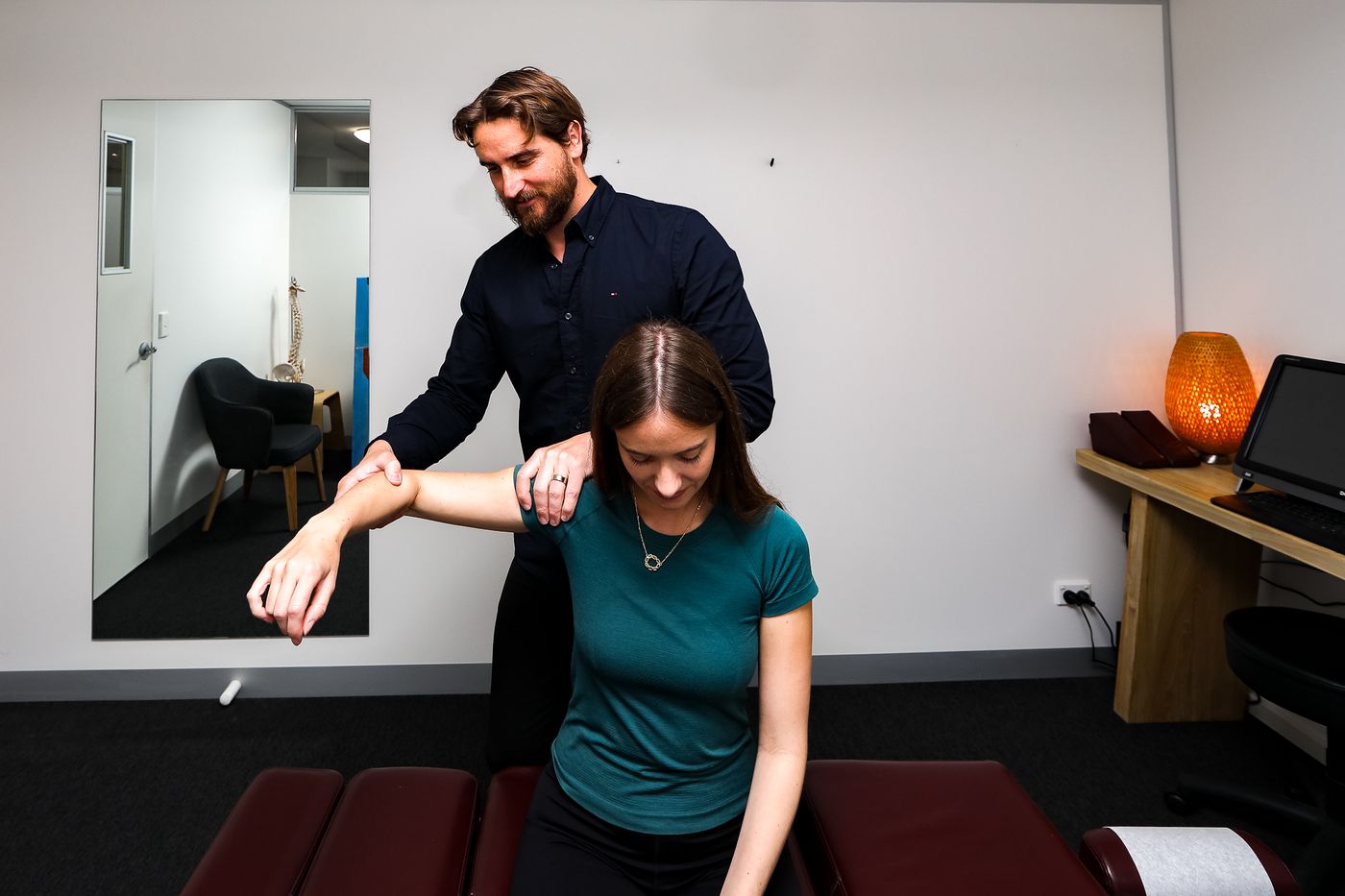
Every curve is different, so care starts with a thorough history and examination. Dr Nick looks at how your spine, ribs, hips and shoulders move, where the stiffness and tightness sit, and what you want to get back to, whether that's a round of golf, gardening or a pain-free walk to the shops. You can read more about what happens on your first visit.
Chiropractic adjustments
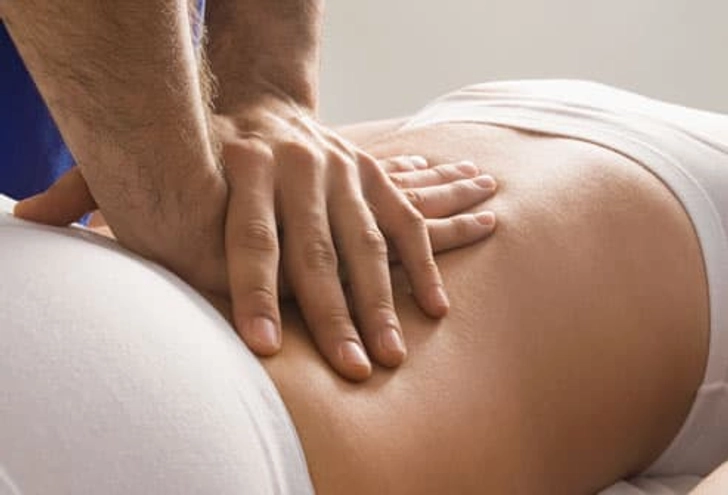
Chiropractic adjustments are the centre of care. In scoliosis, some sections of the spine become stiff and others overwork to make up for it. Adjustments target the stiff segments to improve movement and ease the load on the surrounding joints and muscles. The aim is a spine that moves more freely and feels more comfortable, not a change to the shape of the curve.
Gentle options where they suit
Not everyone wants or needs the same style of adjustment. For older patients, people with sensitive backs, or anyone who prefers a lighter touch, Dr Nick often uses the Activator instrument, a small hand-held tool that delivers a quick, low-force adjustment. The drop-piece table is another gentle option, where a section of the table drops slightly as the adjustment is given, so less force is needed. You can see how these work on our techniques page.
Soft tissue work
The muscles on one side of a curve are often tight and overworked. Soft tissue work through the back, ribs, hips and neck helps ease that tension and makes it easier to move evenly.
Exercises
Exercises are where you keep the gains between appointments. Dr Nick will show you a short set of stretches and strengthening exercises suited to your curve, including core and hip work, and rotation drills for golfers. They are kept simple enough to do at home in a few minutes a day.
Advice for daily life
Small changes add up: how you set up your desk or car seat, how you carry things, what sleeping position suits your back, and how to adapt your training or golf swing. For golfers, Dr Nick's TPI Level 1 certification helps in working out how a curve affects your swing and what to work on.
What chiropractic care can help with
For people with scoliosis, the realistic goals of care are:
- Less back and neck discomfort
- Better movement through stiff areas of the spine
- Less one-sided muscle tightness
- More comfort with walking, standing, sport and work
- A clear plan for exercises and habits that keep you moving well
You can read more about how we help with curves on our scoliosis page.
Book an appointment
If scoliosis is making your back stiff or sore, or getting in the way of sport and daily life, we'd be glad to help. Book online, or call the clinic to arrange a free phone consultation with Dr Nick to talk through whether chiropractic care suits you.