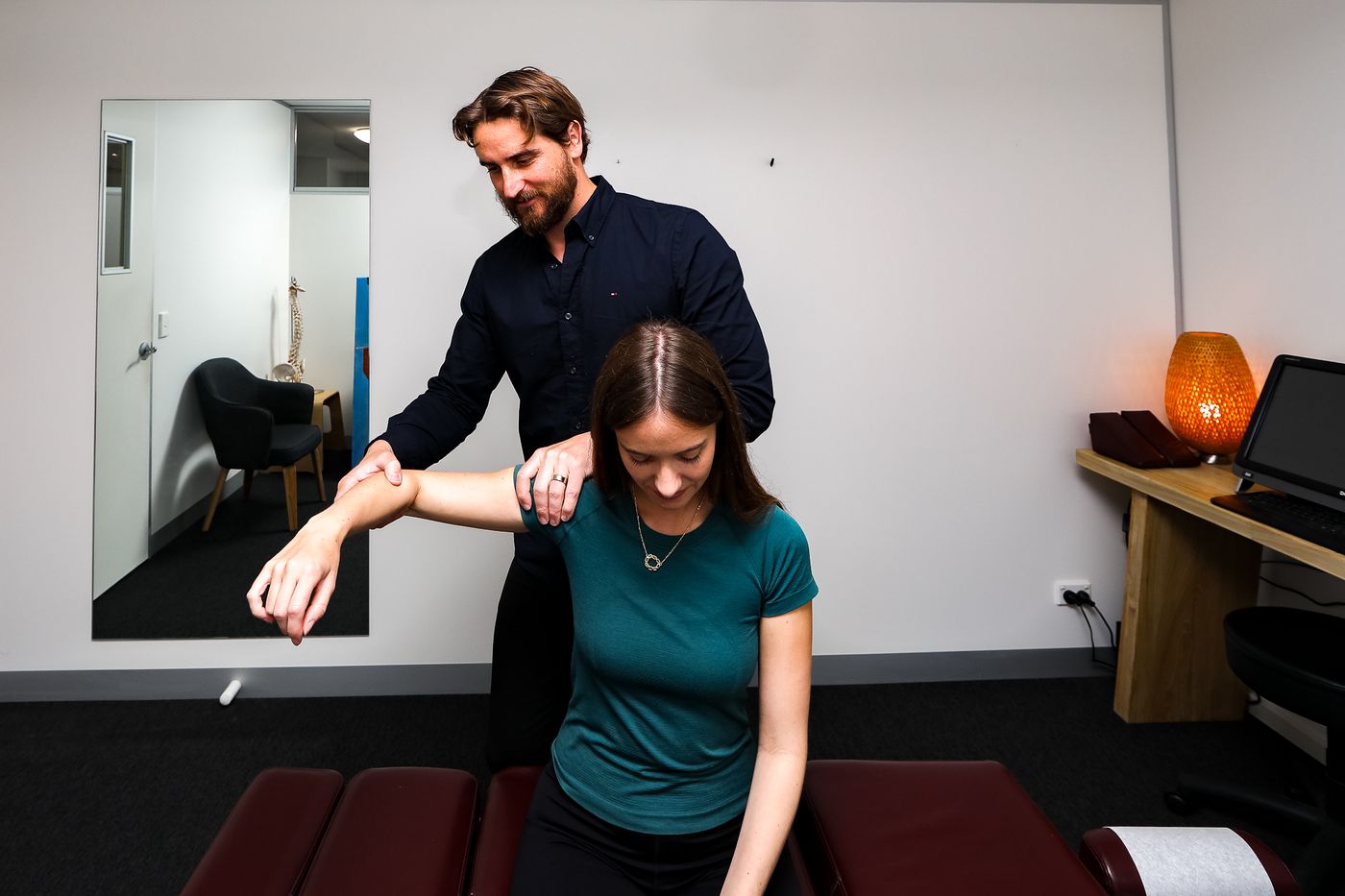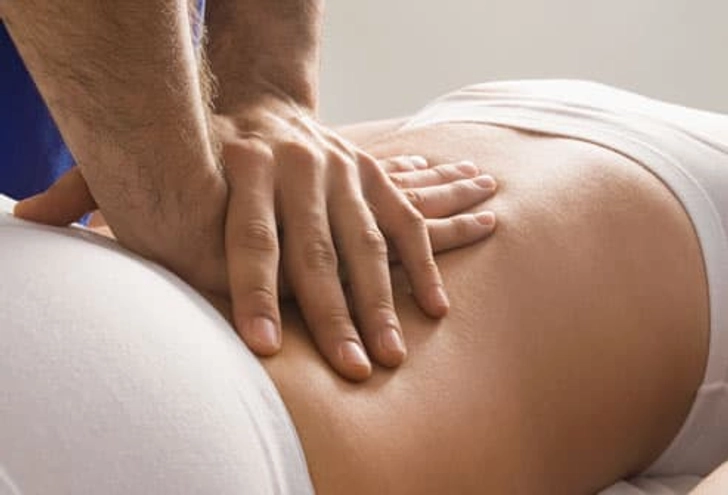

When most people picture a chiropractic adjustment, they picture the hands-on version: a quick thrust, often with a pop. That is a big part of what we do at Capel Sound Chiropractic, but it is not the only way to adjust a joint. For some patients, and for some parts of the body, I reach for a small handheld tool called the Activator instead.
This post explains what the Activator is, what an Activator adjustment actually feels like, who tends to prefer it, and how it fits in with the other techniques we use in the clinic.
What the Activator instrument is
The Activator is a spring-loaded adjusting instrument about the size of a large pen. When I press it against a joint and trigger it, it delivers a single, very fast, controlled impulse through a small rubber tip. That impulse is the adjustment.
The key difference from a manual adjustment is that the Activator relies on speed rather than force. There is no twisting of the neck, no rolling you onto your side and no big push through the spine. The instrument does its job in a fraction of a second, which is quicker than the surrounding muscles can tense up against it. That is a large part of why it feels so gentle.
Because the contact point is small, the Activator is also very specific. I can direct the adjustment to one vertebra, one rib joint or one small joint in the foot, wrist or jaw, rather than moving a whole region at once.
What an Activator adjustment feels like
Most people describe it as a firm tap or a quick click. You will hear the instrument click, but you will not hear or feel the joint pop the way you might with a manual adjustment. Nothing is twisted or stretched, and you stay still the whole time.
A typical Activator adjustment at the clinic goes like this:
- Positioning. Usually you lie face down on the table, but the Activator can also be used with you lying on your back, on your side or sitting, depending on the area and what is comfortable for you.
- Checking. I check how the joints are moving and where they are stiff or restricted. The Activator approach also uses simple checks such as comparing leg lengths while you lie face down and watching how that changes with small movements. These help narrow down which joints to adjust.
- Adjusting. I place the tip on the joint, set the line of the adjustment and trigger the instrument. Each adjustment is one quick impulse.
- Rechecking. After each adjustment I recheck before moving on, so the treatment is worked through one joint at a time.
There is no recovery time. Most people get up off the table and go straight back to their day. Some feel looser straight away; others notice the change over the following day or so.
Who tends to choose the Activator
The Activator is not reserved for one type of patient, and I do not decide for you. We talk through the options at your first appointment and you choose what you are comfortable with. That said, certain groups do tend to prefer it.
Older patients
A good share of our patients are older people from around Capel Sound, Rosebud and the surrounding suburbs, including residents of The Village Glen. Many of them are dealing with stiff, worn joints, lower bone density or a history of joint replacements. For a lot of older patients a firm manual adjustment through the spine is not the right fit, and the Activator lets me adjust the joints that need it with much less force going through the body.
People who prefer a lighter touch
Some people simply do not like the feeling or sound of a manual adjustment, especially in the neck. Others have had an uncomfortable experience somewhere else and have put off getting help since. The Activator is a straightforward answer to that. You still get an adjustment, just without the twist and the pop.
People who are sore and guarded
When a back or neck has just flared up, the muscles around it are often clamped down and the area does not want to be moved much. Getting into position for a manual adjustment can be uncomfortable in itself. Because the Activator needs no twisting and very little positioning, it is often an easier way to start working on an acute flare-up of low back pain or a stiff neck.
Small joints and specific areas
The Activator is useful for areas that are awkward to adjust by hand: the jaw, ribs, wrists, elbows, knees, ankles and feet. Its small contact point makes it easy to target one joint precisely. This comes up often with golfers, where a stiff rib or wrist joint can affect the swing as much as the lower back does.
How the Activator fits alongside manual adjustments and the drop-piece table
At Capel Sound Chiropractic, chiropractic adjustments are the core of treatment. The Activator is one of three ways I deliver them, and I often combine them in the same appointment.
Manual adjustments
Hands-on adjustments are what most people expect, and for many patients they are what works well. They are useful for larger regions of the spine and for people who are comfortable with a firmer adjustment. Plenty of patients have manual adjustments through the lower back and Activator adjustments through the neck, or the other way around.
The drop-piece table
Our treatment table has sections that can be raised slightly and set to drop a short distance when I apply a quick thrust. The drop does part of the work, so less force is needed from my hands. It sits somewhere between a full manual adjustment and the Activator: you feel more movement than with the instrument, but there is no twisting. It is a common choice for the pelvis and lower back.
Choosing between them
Which technique I use depends on a few practical things:
- Which joints need adjusting and where they are
- How sore and guarded the area is on the day
- Your age, joint health and general history
- What you are comfortable with
It is not fixed. Someone might start with mostly Activator adjustments while a flare-up settles, then move to the drop-piece table or manual adjustments as they loosen up. Others stick with the Activator throughout because it suits them. You can ask to change at any point.
What else goes into treatment
Adjustments come first, but they are rarely the only thing we do. Depending on what is going on, I may add soft tissue work on tight muscles around the joint, and give you a few exercises to keep the area moving between appointments. For golfers, that often includes mobility and strength work tied to the swing, drawing on my TPI Level 1 certification. Advice on sitting, sleeping, lifting or getting back into activity is part of it too.
If you want to see how all of this fits together, our techniques page covers each approach in more detail.
Your first appointment
Your first appointment starts with a conversation about what is bothering you, how it started and what it is stopping you from doing. Then I examine how your spine and joints are moving. Before any treatment, I explain what I have found and which adjustment options make sense for you, including the Activator. If you would rather not have a manual adjustment, just say so and we will plan around that.
The clinic is at 1639 Point Nepean Road, Capel Sound, between the Capel Sound Newsagency and Sound Bar, with free street parking out the front and wheelchair access. We see patients from Rosebud, Tootgarook, Rye, McCrae, Dromana, Blairgowrie, Sorrento and across the southern Peninsula. You can read more about what to expect at your first visit.
Book in or ask a question
If you have been putting off seeing a chiropractor because you are not keen on being twisted or cracked, the Activator may be the option that suits you. You can book online, or call the clinic and ask for a free phone consultation with Dr Nick to talk through whether it is a good fit before you come in.